Fatigue vs. Sleepiness: Why the Difference Matters for Your Recovery
You've probably said it before: "I'm so tired, but I just can't sleep." That frustrating experience actually points to something important — and understanding it is one of the first steps toward better sleep.
Feeling tired is a common experience, but not all tiredness is the same. Many people confuse fatigue with sleepiness, yet these two states affect the body and mind in different ways. Knowing the difference can help you address the root cause and improve your overall well-being.
Fatigue vs. Sleepiness: What’s the Difference?
These two terms are often used interchangeably, but they’re actually very different experiences:

Biggest Take Away = You can be deeply tired without being truly sleepy!
What Are the Causes?
What May Cause Sleepiness?
If you’re feeling sleepy during the day—even after what seems like a full night’s sleep—it could indicate a sleep quality issue rather than quantity.
Sleep quality refers to your overall satisfaction with the sleep experience.
It includes elements such as the speed at which you fall asleep, the duration of your sleep, the frequency of awakenings during the night, and how refreshed you feel upon waking up
Sleep deprivation: Not sleeping enough hours due to lifestyle, stress, or work schedules.
Poor sleep quality: Disrupted sleep caused by light, noise, baby awakenings or other conditions that prevent deep sleep.
Medication or alcohol use.
Sleep disorders such as sleep apnea, restless legs syndrome, and narcolepsy.

What May Cause Fatigue?
You may feel persistently tired even if you’re technically getting enough rest.
Lifestyle factors:
Dietary choices: High-sugar diets can cause energy “crashes,” while deficiencies in iron, vitamin B12, or vitamin D are common triggers for exhaustion.
Dehydration: Even mild dehydration can lead to lower energy levels and decreased concentration.
Activity levels: Both sedentary lifestyle and over-exercising can cause persistent tiredness.
Psychological causes:
Depression: Fatigue is a primary symptom, often appearing as a lack of motivation or physical heaviness.
Anxiety, stress & burnout: Chronic stress keeps the body in “fight or flight” mode, which is physically draining over time.
Grief: Emotional exhaustion from loss can manifest as profound physical tiredness.
Medical conditions:
Chronic illness: Diabetes, heart disease, kidney disease, and autoimmune disorders like rheumatoid arthritis often include fatigue as a key symptom.
Hormonal imbalances: An underactive thyroid slows the body’s processes, leading to sluggishness.
Infections: Viruses like the flu, COVID-19, or mononucleosis can cause lingering fatigue well after other symptoms disappear.
Knowing the cause is crucial. For example, someone with untreated sleep apnea may feel sleepy during the day despite getting hours of sleep at night. Meanwhile, a person with chronic fatigue syndrome experiences ongoing exhaustion that rest alone does not fix.
Ways to Manage Fatigue and Sleepiness
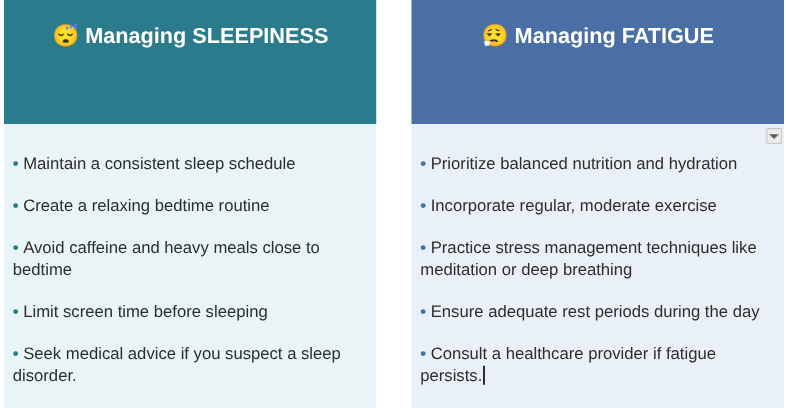
Don’t Ignore the Signs—Take the Next Step
Tired of being tired? You don’t have to guess what’s going on—or go it alone. Understanding the difference between fatigue and sleepiness is just the first step. If you're experiencing daytime fatigue, chronic tiredness, or other signs of sleepiness, help is available. An Occupational Therapist can help you assess what is going on - and assist you with next steps.


Comments